Flue gas recirculation
NOx emissions – basics
NOx, and therefore nitrogen oxides, are a component of emissions that harm the environment and are therefore subject to legal regulation.
Chemical formation process
Nitrogen oxides is the collective term for gaseous oxides of nitrogen (nitric oxide NO and nitrogen dioxide NO2). Due to the many oxidation states of nitrogen, quite a few compounds of nitrogen and oxygen can form. These are abbreviated as NOx. The chemical formation process is illustrated in the figure below:
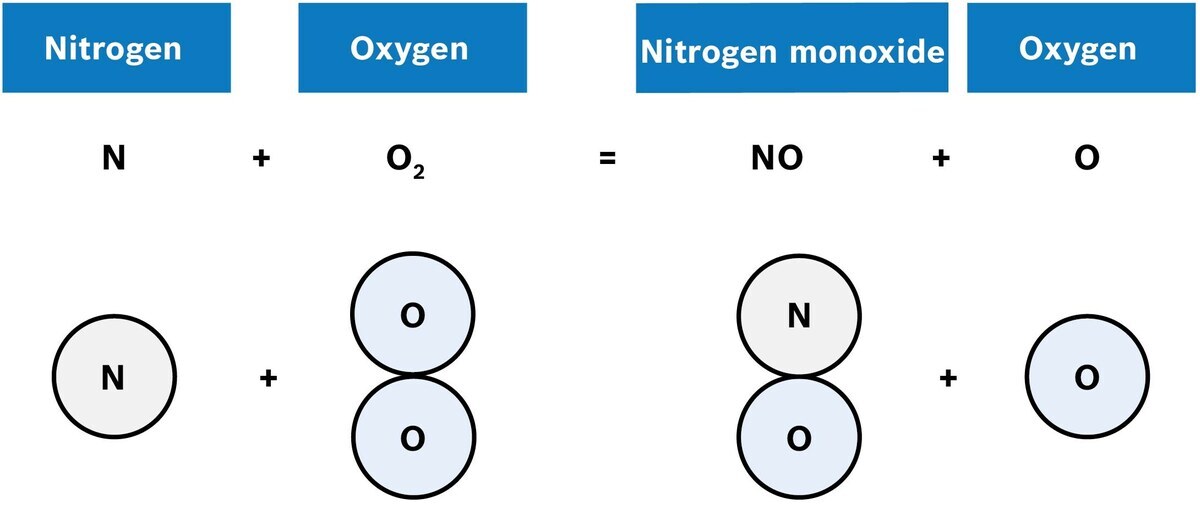
The chemical formation process of NOx
The unit in which NOx is expressed is mg/Nm3. It is important to be familiar with the defined reference value. The reference value or the defined reference quantity for the specified NOx value in milligrams per standard cubic metre is generally 3 % oxygen.
Influencing factors on NOx formation
The following factors influence the formation of NOx.
- Fuel
- Fuel moisture
- Nitrogen content
- Oxygen content
- Flame tube geometry
- Length
- Diameter
- Design (undulating, smooth)
- Combustion process
- Burner system
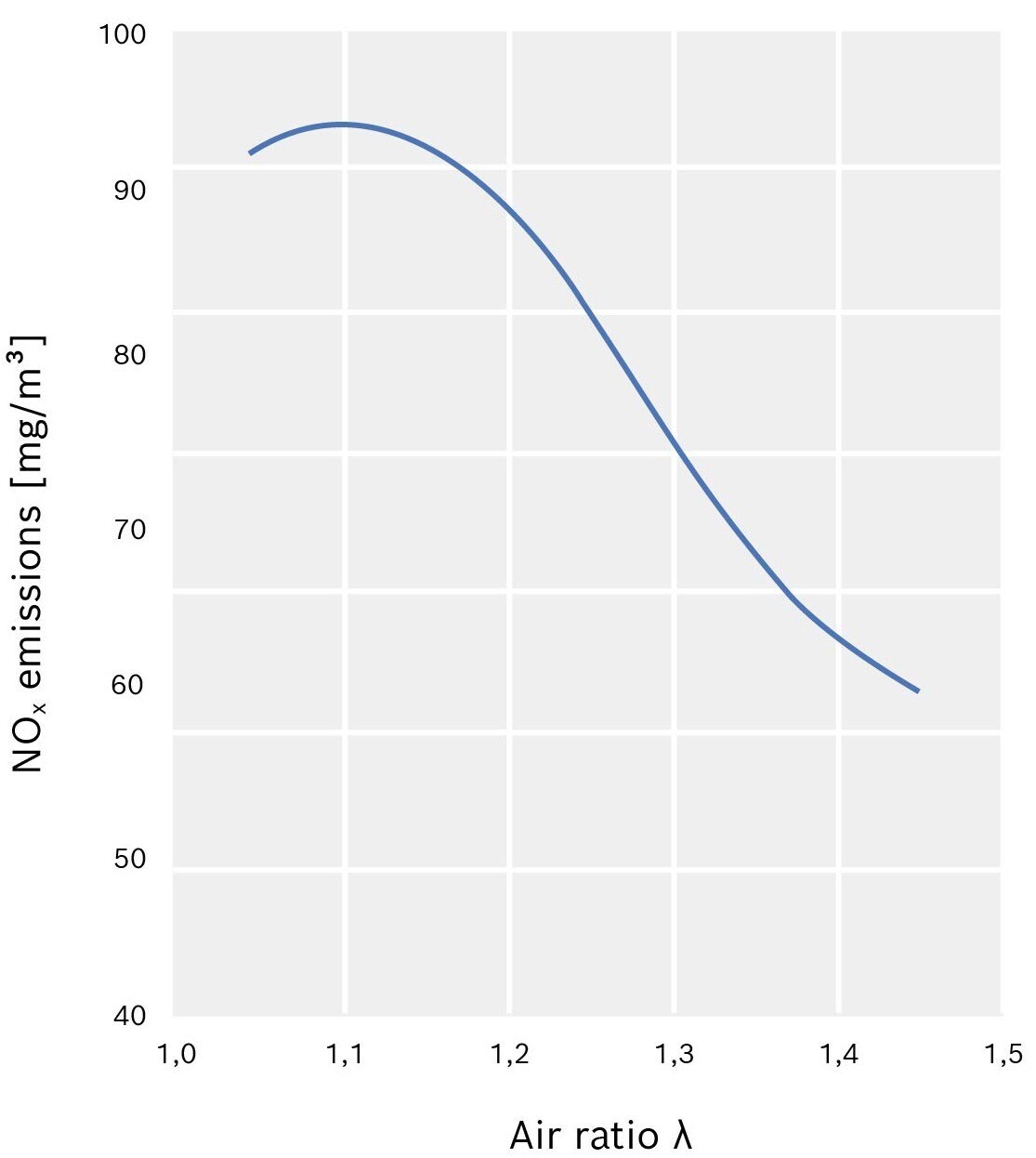
- Air quantity/excess air
- Temperature
- Flame core temperature
- Combustion air temperature
- Boiler water temperature
- Time
- Dwell time in the combustion zone
Types of NOx
Thermal NOx
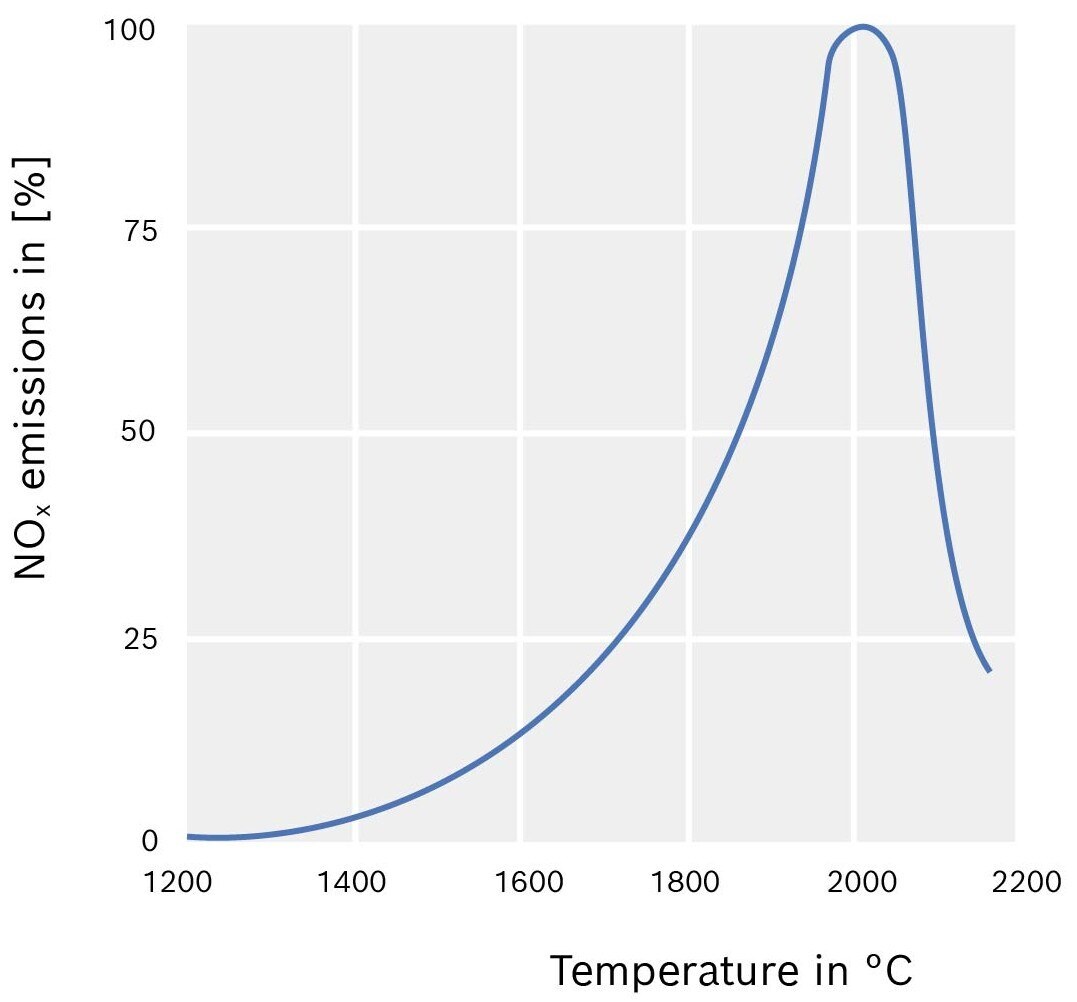
Thermal NOx is expected to form at combustion temperatures of around 1,000 °C or higher, with a sharp increase observed from 1,400 °C onwards. The formation rate increases exponentially with the temperature. The thermal NOx emission formation occurs in the hottest part of the flame (flame core). The formation of thermal NOx can be predicted using the Zeldovich mechanism. The reaction rates are low at low temperatures, but increase exponentially.
Fuel NOx
The source of this NOx type is the bound nitrogen content of the fuel and is therefore fuel-dependent. These occur from temperatures around approximately 800 °C, predominantly in flame fronts of combustion systems.
Prompt NOx
Instead of producing a conversion to N2, the reaction of hydrocarbon radicals (CHn) with N2 may lead to the formation of NOx again. Prompt NOx occurs in very rapid formation reactions, in comparatively low amounts and, by comparison with thermal NOx, has practically no relationship with temperature.
The key finding is this: The hotter the flame, the higher the NOx content.
Regulations
There is no uniform global standardisation regarding NOx limits. Regulations may therefore vary at national, regional or even local level. It is important to comply with the legislation and standards that specifically apply to the installation site.