
Emissions
In most countries around the world, there are emission and/or immission regulations in place to protect the environment and people, which are relevant to the operation of a hot water boiler system and must be taken into account during planning.
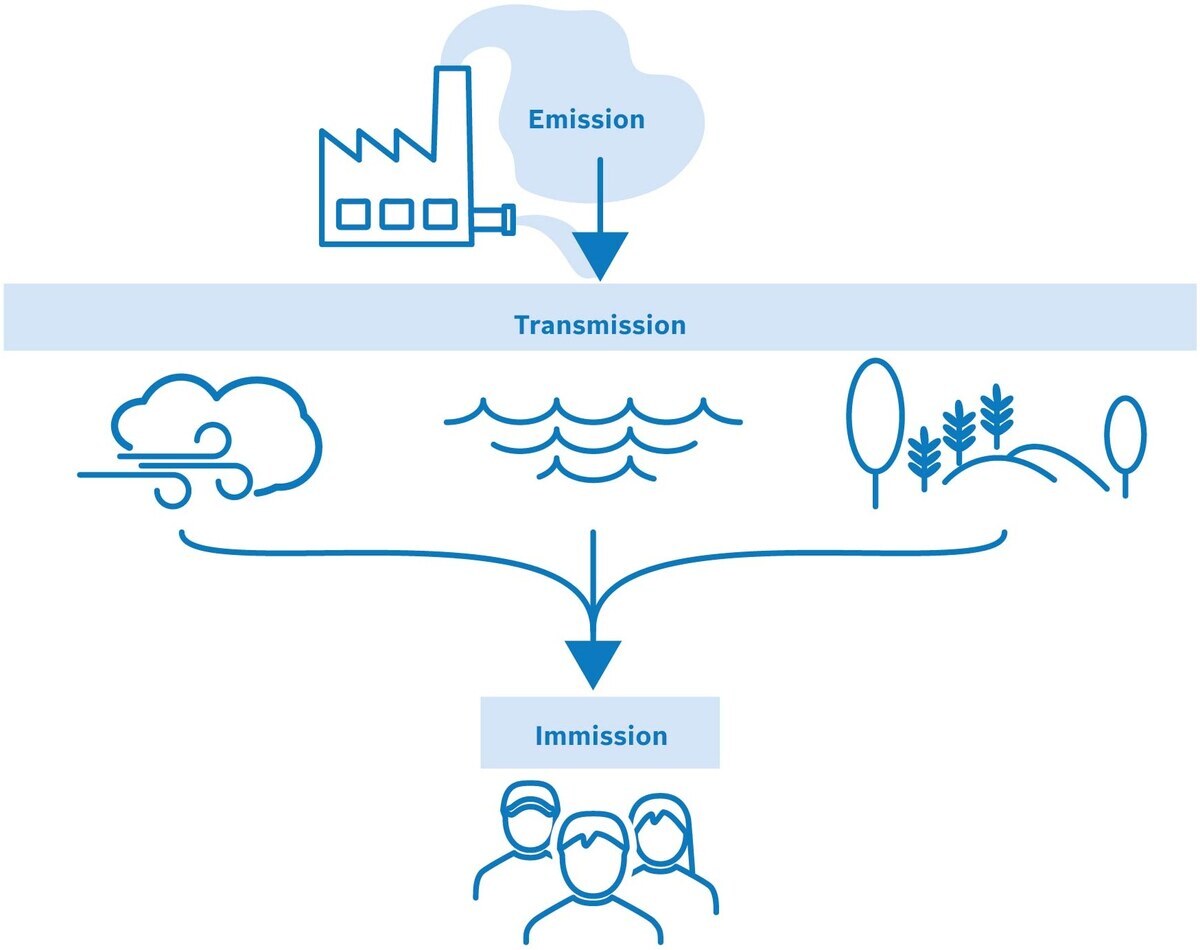
Distinction between emission, transmission and immission
- Emission is the release of contaminants into the environment. They are caused, for example, by the operation of power stations, industrial systems and motor vehicles. A person or object that emits emissions is referred to as an emitter.
- Transmission is the distribution of emissions through air, water or soil.
- Immission is pollution of the air, water or soil that affects humans or other organisms.
The following emissions are usually regulated and relevant for a boiler system:
- Air-borne emissions (flue gases from combustion systems)
- Nitrogen oxide (NOx)
- Sulphur compounds (SO2)
- Carbon monoxide (CO)
- Dust/soot value
- Sound
- Waste water and conservation of water
- Delivery, storage and distribution of water-polluting substances (e.g. fuel oil)
- Discharge of waste waters with requirements for constituents (e.g. pH value, temperature)