
Firing and heating
Firing
The purpose of the combustion process is to completely burn the carbon, hydrogen and any sulphur contained in the fuel, producing CO2, H2O and SO2. To ensure that this process is as low-emission as possible, it is essential that the fuel and combustion air are present in the combustion chamber in the correct mixture ratio, both in terms of timing and location.
For shell boilers, pressurised combustion is used almost exclusively for this purpose. This means that the combustion air fan must provide overpressure of 5 to ≤ 50 mbar to overcome the resistance caused by the boiler and any downstream heat exchangers. There is therefore always a slight overpressure in the combustion chamber.
Technical Information: Requirements of an on-site combustion system
Fuels
Despite the increased use of alternative primary energy sources, natural gas and fuel oil remain the most commonly used fuels. Depending on how the hot water boiler or heating boiler is operated, the required output or the requirements for emission values, each of these standard fuels offers different advantages and is suitable for different applications.
In addition to standardised fuels, a wide variety of gaseous and liquid fuels can also be used in a shell boiler. Depending on the fuel, this can be easily achieved or may require considerable extra effort. In any case, the use of these fuels should be carefully considered during the project phase, as they not only involve higher capital expenditure but may also require more rigorous monitoring and maintenance during operation.
Information about energy sources
These fuels can be burned either as a standalone supplementary fuel – for example, when using a dual-fuel burner with natural gas and a special liquid fuel – or as a blended fuel, such as natural gas mixed with biogas.
The right combination of fuel, combustion system and combustion chamber is crucial, particularly for ensuring that combustion produces as few pollutants as possible.
Fan variants for combustion installations
Monoblock burner
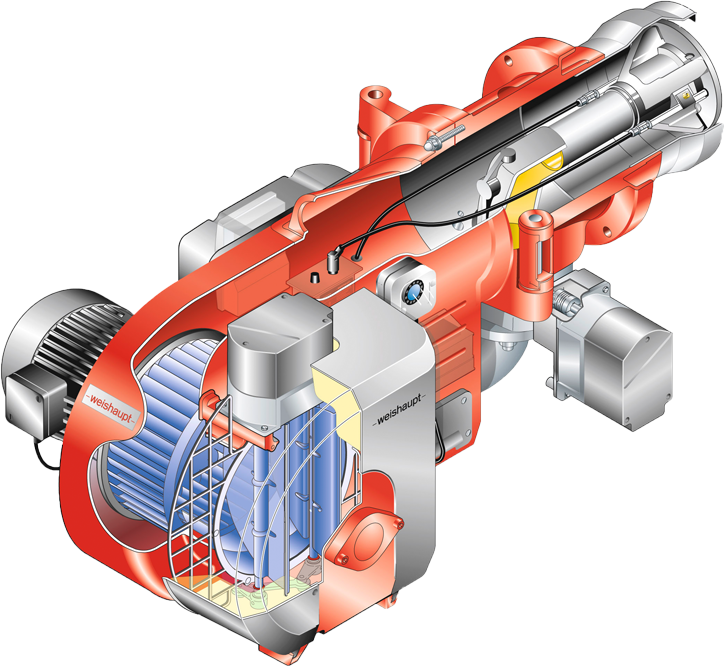
Cross-section of a monoblock burner (Image: Weishaupt)
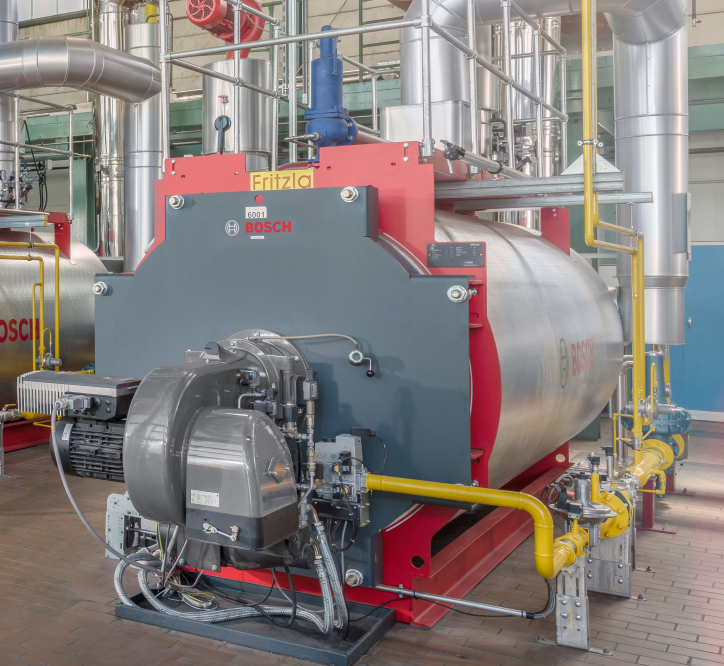
Installed monoblock burner on a hot water boiler
The term “monoblock burner” or “fan-assisted burner” refers to combustion systems in which the combustion air fan is integrated directly into the burner housing. This burner system is suitable for fuel oil and gaseous fuels, and can also be used as a dual-fuel system, allowing for simple switching between gas and oil combustion. The main advantages of monoblock burners lie in their compact and therefore cost-effective design, and in the fact that all components of the combustion system can be fitted directly onto the boiler, saving space. Monoblock burners can be used for burner outputs of up to around 10 MW. However, they are not suitable for use with air preheating.
Duoblock burnerA duoblock burner is a type of burner in which the combustion air fan is installed separately from the combustion unit. The combustion air fan is connected to the burner via a combustion air channel. The duoblock burners are used specifically for high burner outputs and when air preheating is employed.
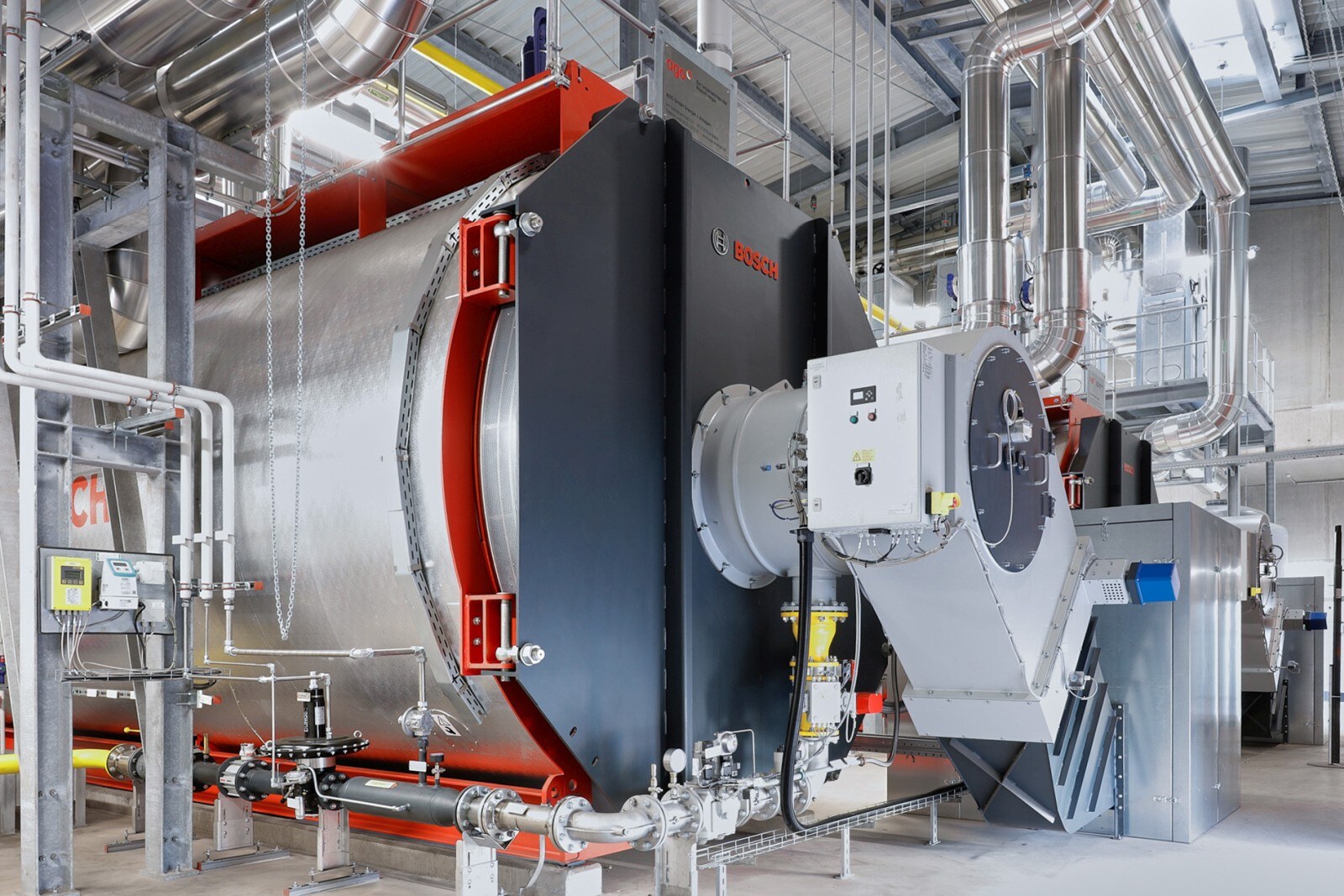
Duoblock burner with a side-mounted fan