
Combustion installations for gaseous fuels
Natural gas is now available in most locations and is usually cheaper to purchase than oil. As a result, the proportion of gas combustion systems has risen steadily in recent years. Despite the changing situation in the energy market, particularly in Europe, natural gas remains one of the most widely used fuels.
Information about the criteria for choosing between fuel oil and natural gas as a fuel
In addition to the economic benefits, there are other advantages to using fuel gas:- No fuel storage
- Reduced soiling of the heating surfaces
- Less prone to faults
- Lower NOx and CO2 emissions
- Simpler use of the condensing technology

Monoblock gas burner (Image: Dreizler)
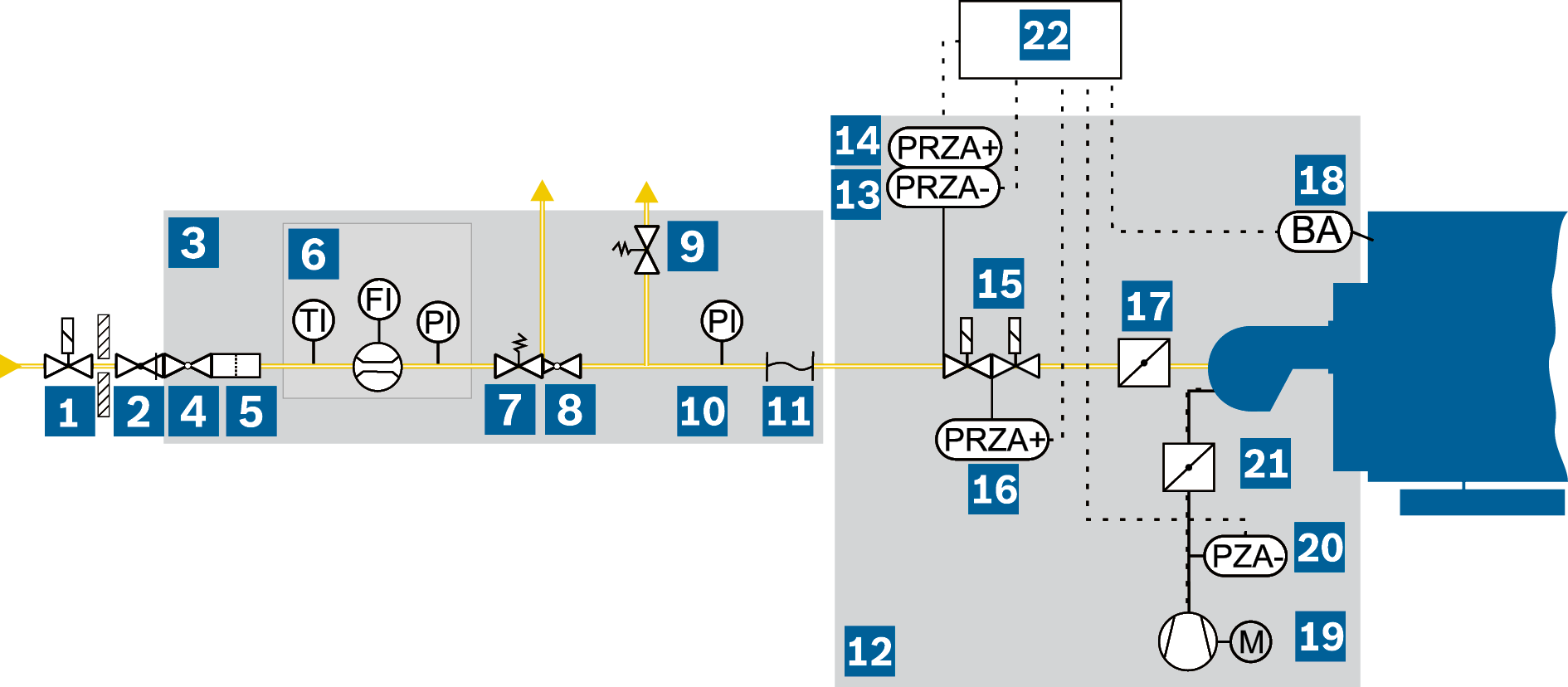
Sample schematic diagram of a gas combustion unit (high-pressure supply)
|
BRZA- |
Flame monitoring |
|
FI |
Flow rate indicator |
|
FI |
Pressure indicator (pressure gauge) |
|
PZA- |
Protection against air shortage |
|
PRZA- |
Gas minimum pressure limiter |
|
PRZA+ |
Gas maximum pressure limiter |
|
TI |
Temperature indicator |
|
|
Safety shut-off valve: Shuts off the gas supply in the event of faults and emergency stops (located outside the boiler room) |
|
|
Thermal shut-off device: Shut-off of the gas supply in the event of a fire in the boiler house |
|
|
Gas regulation module |
|
|
Stop cock: For manual shut-off |


|
|
Gas filter: Protecting sensitive components from soiling |
|
|
Gas meter module: Gas meter with temperature and pressure measurement for converting from operation m3/h to standard m3/h |
|
|
Safety shut-off valve: Shuts off the gas supply in the event of an unauthorised rise in gas pressure |
|
|
Gas pressure regulator: Ensures a consistent gas pressure for combustion |


|
|
Safety blow-down valve: Activates in the event of overpressure downstream of the gas pressure regulator |
|
|
Pressure gauge (PI) |
|
|
Expansion fitting: Compensation for pipe expansion |


Firing system
|
|
Burner |
|
|
Gas minimum pressure limiter (PRZA-): Shuts down the burner if the gas pressure is too low |
|
|
Gas maximum pressure limiter (PRZA+): Shuts down the burner if the gas pressure is too high |
|
|
Double solenoid valve: Dual shut-off of the gas supply when the burner is not in operation |


|
|
Leakage test (PRZA+): Testing the tightness of the solenoid valves |
|
|
Gas throttle valve: Control of the gas quantity |
|
|
Flame monitoring (BRZA-): Shuts down the burner if stable combustion has not been established in the combustion chamber after a start-up interval |
|
|
Fan: Combustion air supply |


|
|
Protection against air shortage (PZA-): Cut-out of the combustion system in the event of low discharge pressure from the combustion air fan |
|
|
Air damper: Control of the fuel-to-air ratio |
|
|
Burner manager/burner safety chain |


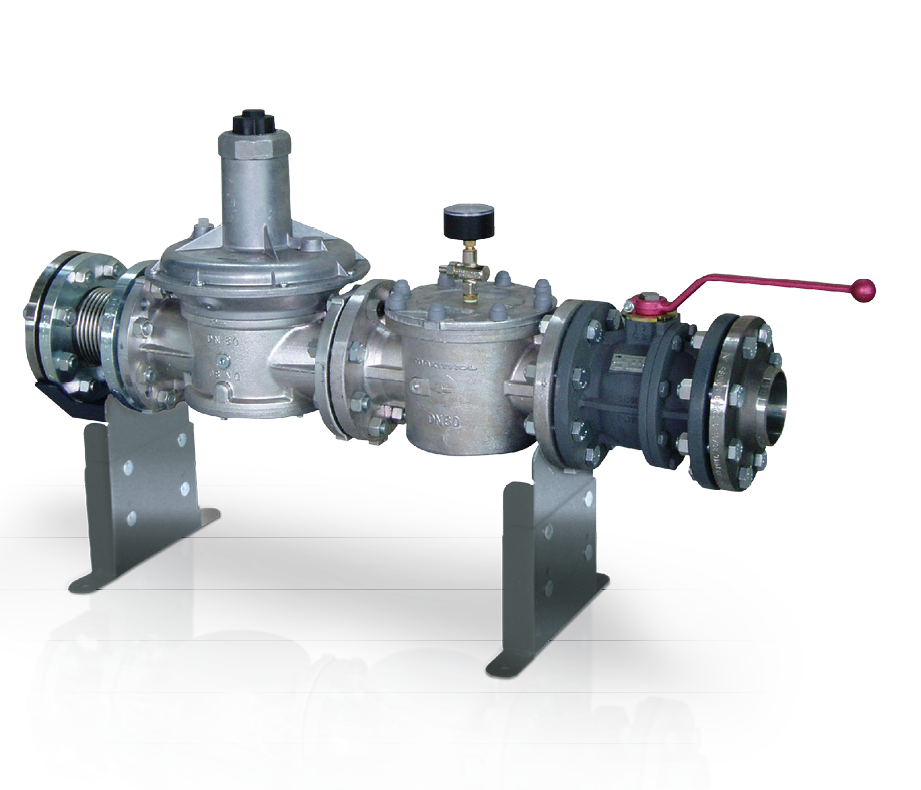
Gas regulation module
| FI | Flow indicator |
| PI | Pressure gauge (manometer) |
| TI | Temperature gauge |
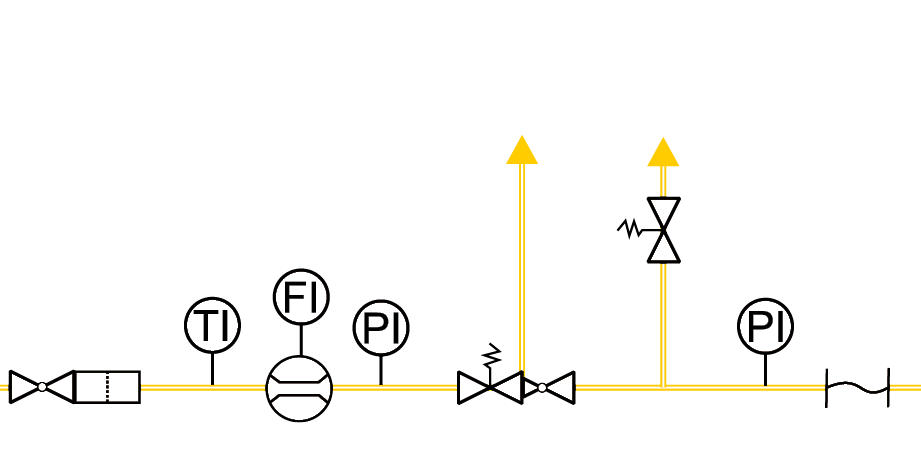
Gas regulation module graphic
The gas regulation module contains all the control and safety devices required for the safe and trouble-free operation of the combustion process. In particular, the gas and air supply are adjusted via an electronic or pneumatic integrated control system so that the correct fuel-to-air ratio is maintained at all load points to ensure complete, safe and efficient combustion in the combustion chamber.
The gas pressure regulator is fitted to ensure a constant gas pressure upstream of the burner, regardless of fluctuations in the supply pressure. If the gas pressure were to change, the gas-to-air ratio at the burner would change, which could result in either an unstable flame or heavy sooting with CO formation. If the protected gas inlet pressure may exceed the permissible working pressure of the components in the gas line, a safety shut-off valve (SAV) and a safety blow-down valve (SBV) must be installed upstream of the controller.
The pressure monitors monitor the minimum and maximum permissible gas pressure. No gas must enter the combustion chamber when the system is shut down or during pre-ventilation, as this could cause a deflagration. For safety reasons, there are two gas solenoid valves, and the burner sequence checks the valves for leaks before each burner start-up (gas tightness diagnosis device).